Why Do People With ADHD Interrupt Conversations?
Do you interrupt without meaning to? ADHD can affect working memory, impulse control, and fast thinking. Learn why it happens in conversations.
People with ADHD often interrupt conversations because ADHD affects working memory, impulse control, and how quickly the brain generates new ideas.
Many people with ADHD interrupt conversations, often without meaning to. This behavior isn’t about being rude or not listening. It usually happens because ADHD affects working memory, impulse control, and how quickly the brain generates ideas.
Impulsivity and reduced inhibition make it harder to pause before speaking.
– People with ADHD often interrupt because working memory is fragile — thoughts can disappear quickly.
– ADHD brains make fast associations, creating an urgent need to share ideas.
– Interrupting often reflects engagement and enthusiasm, not disrespect.
Key Takeaways
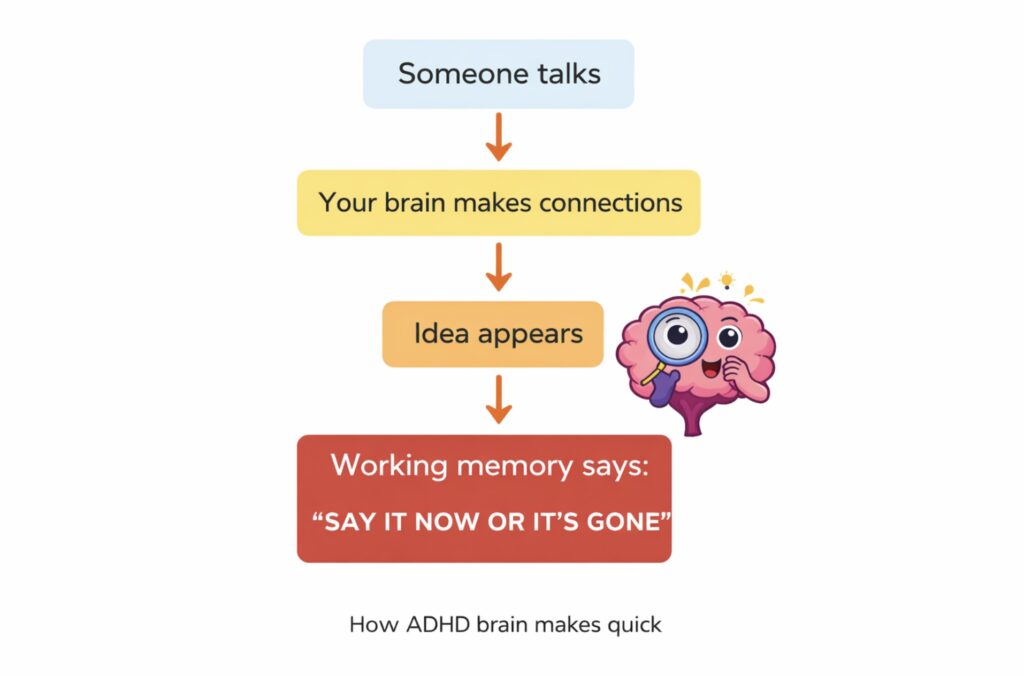
Someone is talking…
You suddenly remember something important…
Your brain screams “Say it now or it’s gone forever.”
If you have ADHD, you’ve probably had this moment:
So you interrupt.
Then immediately feel rude, embarrassed, or ashamed.
But interrupting in ADHD is not about disrespect.
It’s about how the ADHD brain processes information in real time.
Let’s break down what’s actually happening.…..
1. Working Memory Is Fragile
People with ADHD often have weaker working memory — the brain system that temporarily holds information.
When a thought appears, the brain knows something important:
“If I don’t say this immediately, it will disappear.”
And often it does disappear.
So the interruption is actually a memory protection strategy, not impatience.
The brain is trying to save the idea before it vanishes.
2. ADHD Brains Are Highly Associative
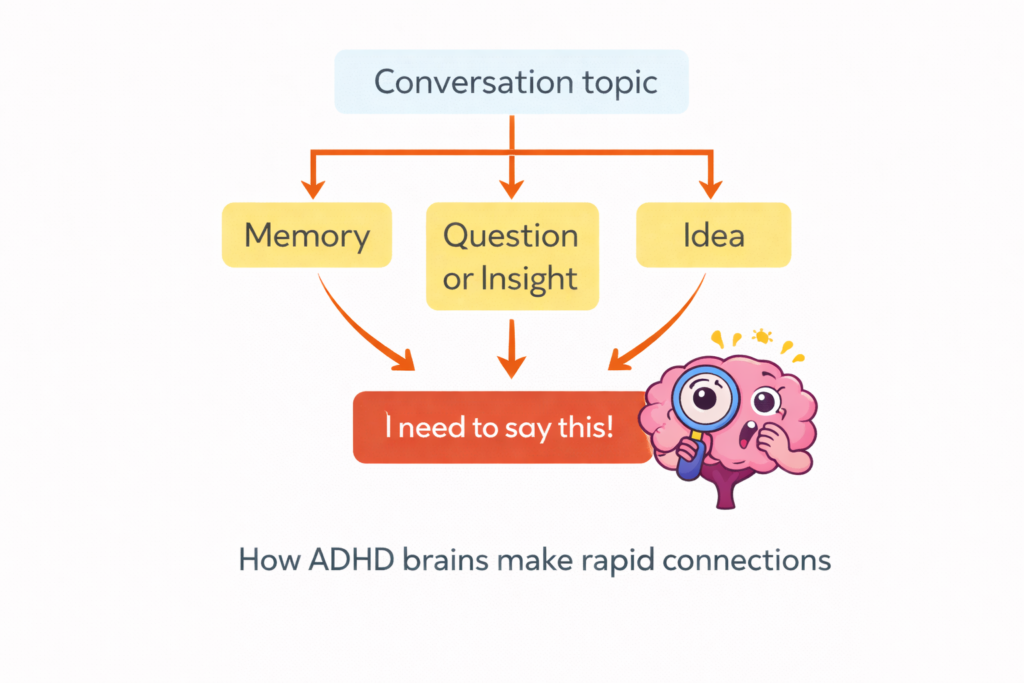
ADHD brains make rapid connections.
While someone is talking, your brain might jump through several ideas in seconds:
– Something they said reminds you of something else
– That triggers a related memory
– That memory sparks a question or insight
The urge to share it feels urgent, because the connection feels exciting and meaningful.
But from the outside, it can look like cutting someone off.
3. Inhibitory Control Is Harder
ADHD affects the brain’s inhibition system.
This system normally helps people:
-pause before speaking
-wait their turn
-hold a thought quietly
When inhibition is weaker, the brain struggles with the micro-pause most people use before talking.
So the thought goes straight from idea → mouth.
4. Time Feels Different in ADHD
Many people with ADHD experience time blindness.
During conversation, waiting for a pause can feel like:
– the topic will move on
-the moment will disappear
-the thought will become irrelevant
So interrupting can feel like keeping up with the conversation, not hijacking it.
5. Sometimes It’s Actually Enthusiasm
Many ADHD interruptions come from engagement, not boredom.
People interrupt because they’re:
-excited
-curious
-relating to the story
-trying to connect
Unfortunately, the social signal others receive is often the opposite.
The Important Thing to Know
Interrupting doesn’t mean someone with ADHD is:
-selfish
-disrespectful
-not listening
Often they’re listening intensely — so intensely that their brain is producing responses faster than they can manage them.
What Helps (Without Shame)
A few strategies many ADHD adults find helpful:
1. Externalise the thought
-> jot a word or quick note on your phone
2. Use a “hold phrase”
-> “I have a thought — remind me in a second.”
3. Practice repair
Repairing is more important than never interrupting.
-> “Sorry, I interrupted. Go on.”
One More Important Point
If you have ADHD and interrupt people sometimes:
You’re not broken.
Your brain is just fast, associative, and memory-fragile.
Interruptions are often the brain trying to protect ideas before they disappear.
With awareness and a few tools, conversations can get easier — without suppressing how your brain works.
FAQ
Do people with ADHD interrupt on purpose?
Usually not. Most ADHD interruptions happen because the brain struggles to hold thoughts in working memory while waiting for a pause in conversation.
Is interrupting a symptom of ADHD?
Interrupting can be related to ADHD traits such as impulsivity, difficulty inhibiting responses, and working memory challenges.
How can people with ADHD interrupt less?
Some helpful strategies include quickly writing down thoughts, using phrases like “remind me in a second,” and repairing interruptions by acknowledging them and letting the other person continue.