People with ADHD often interrupt conversations — not because they’re rude, but because of how the ADHD brain processes information in real time.
Understanding why people with ADHD interrupt conversations starts with understanding how the ADHD brain works.
ADHD-Explained focuses on breaking down how ADHD thinking, attention, and communication patterns work in everyday situations.
Many adults with ADHD have had this experience:
– Someone is talking
– You suddenly remember something important
Your brain screams:
– “Say it now or it’s gone forever.”
So you interrupt
And then almost immediately feel embarrassed or guilty
Many people with ADHD later wonder:
– Why do I interrupt people so much?
– Is interrupting a symptom of ADHD?
– Why can’t I wait my turn in conversations?
But interrupting in ADHD is usually not about disrespect or poor manners.
Instead, it’s often related to how ADHD affects:
– working memory
– impulse control
– emotional excitement
– fast associative thinking
Understanding why ADHD interrupting happens can make these moments feel much less shame-filled.
Key Takeaways
Understanding why ADHD interrupting happens can make these moments feel much less shame-filled.
People with ADHD often interrupt because working memory is fragile, so thoughts can disappear quickly.
ADHD brains make fast connections between ideas, creating a strong urge to share thoughts immediately.
Interrupting often reflects engagement and excitement, not disrespect.
ADHD impulse control differences can make it harder to pause before speaking.
Simple strategies like pausing briefly, writing thoughts down, or practicing conversation awareness can help.
In conversations, the ADHD brain often generates multiple connected ideas very quickly. This rapid thinking pattern is one reason people with ADHD sometimes interrupt conversations.
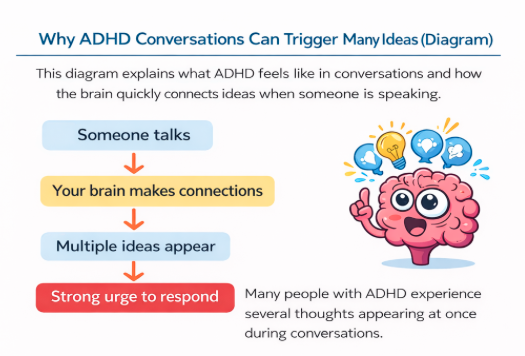
As the diagram shows, one comment in a conversation can trigger several related thoughts at once. Because these ideas appear so quickly, people with ADHD may feel an urgent need to respond before the thought disappears.
1. Working Memory Is Fragile in ADHD
One of the most important reasons people with ADHD interrupt conversations is working memory.
Working memory is the brain system that temporarily holds information.
For many people with ADHD, working memory can be less stable.
Thoughts may appear and disappear quickly.
During a conversation, an idea might suddenly pop up.
The brain immediately reacts with urgency:
“If I don’t say this right now, it will disappear.”
And often, it does.
Because of this, interrupting can actually be a memory protection strategy, not impatience.
The brain is trying to save the idea before it vanishes.
One reason people with ADHD interrupt conversations is the pressure created by working memory. When a thought appears, the brain may feel an urgent need to say it before it disappears.
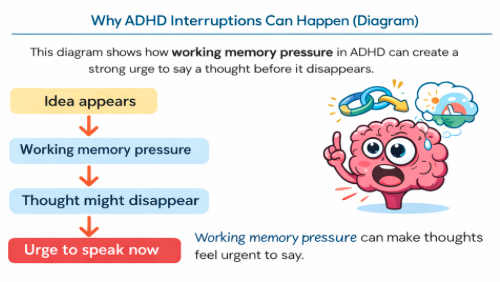
As the diagram shows, working memory pressure in ADHD can create a strong urge to speak immediately. This is why interrupting in ADHD is often about protecting a thought rather than being impatient.
2. ADHD Brains Make Fast Connections
ADHD brains are often highly associative.
This means they make rapid connections between ideas.
When someone says something in conversation, the ADHD brain may instantly connect it to:
– a similar experience
– a personal story
– a new insight
– a related question
These connections can happen within seconds.
Because the connection feels exciting and relevant, it can create a strong internal urge:
“I need to say this now.”
From the outside, this can look like interrupting.
From the inside, it often feels like naturally continuing the conversation.
Many people with ADHD interrupt conversations because their brains generate ideas very quickly. The diagram below shows how ADHD thinking can create rapid chains of connected thoughts.”
This helps Google connect the image to:
– fast idea generation
– ADHD interrupting conversations
– ADHD thinking
– fast idea generation
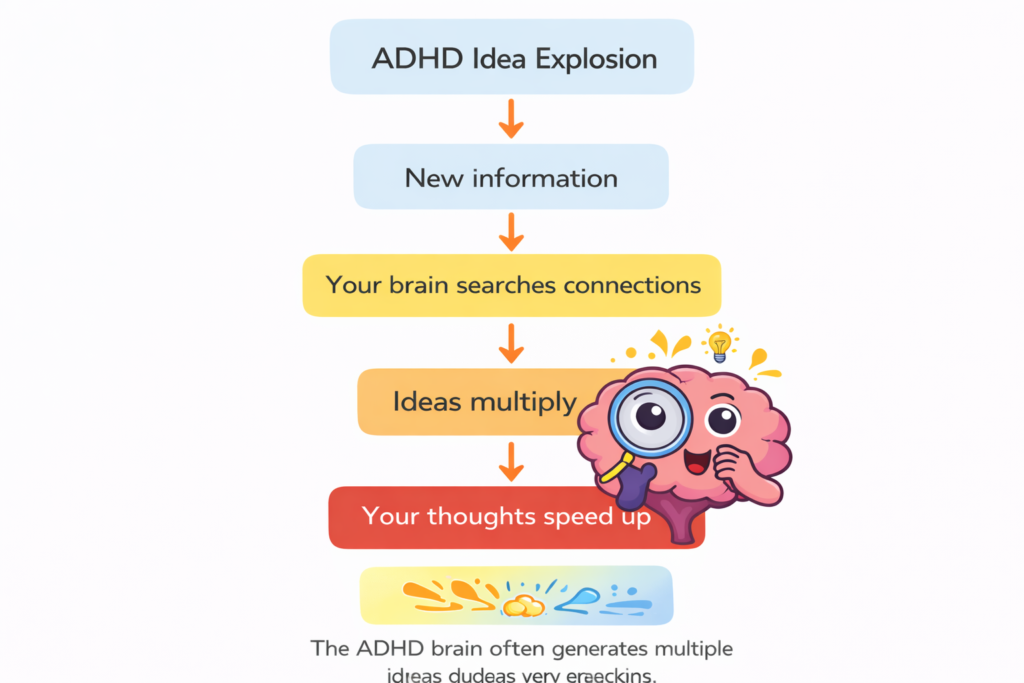
Because thoughts connect so rapidly in the ADHD brain, it can create a strong urge to speak before the idea disappears. This is one reason people with ADHD may sometimes interrupt conversations without meaning to.
3. Impulsivity Makes Pausing Harder
Another core ADHD trait is impulsivity.
Impulsivity doesn’t only affect actions — it also affects speech.
Most people naturally run thoughts through a quick mental filter before speaking:
– Is this the right moment?
– Is this relevant?
– Should I wait?
For people with ADHD, this filter can be slower or weaker.
A thought appears, feels important, and comes out almost immediately.
Often the realisation happens after the conversation, not during it.
This is why many ADHD adults think later:
– “Why did I say that?”
– “I didn’t mean to interrupt.”
4. Interrupting Often Means the Person Is Engaged
Many people assume interrupting means someone isn’t listening.
But in ADHD, the opposite is often true.
Interrupting frequently happens because the person is:
– deeply engaged
– mentally stimulated
– excited by the conversation
When conversations are interesting, the ADHD brain releases dopamine.
Dopamine increases:
– curiosity
– enthusiasm
– talking
– idea sharing
In other words, the brain is enjoying the conversation so much that it struggles to slow down.
5. ADHD Time Perception Can Create Urgency
Another lesser-known ADHD trait involves time perception.
Many ADHD brains experience time differently.
Moments can feel urgent or immediate.
When an idea appears, it can feel like it must be shared right now.
Waiting even a few seconds can feel uncomfortable, almost like the thought will disappear or become irrelevant.
This sense of urgency can increase the likelihood of interrupting during conversations.
6. Emotional Intensity Can Drive Conversation Energy
Many people with ADHD experience emotions very strongly and directly.
When a topic feels meaningful or exciting, the brain can become highly stimulated.
This emotional engagement can lead to:
– faster talking
– sharing more stories
– jumping in quickly with ideas
While others might slowly reveal personal experiences over time, someone with ADHD may share them much earlier in a conversation.
This often reflects authentic enthusiasm, not a lack of boundaries.
ADHD thinking often moves quickly because the brain makes rapid connections between ideas. The diagram below shows how one thought can quickly trigger several more.
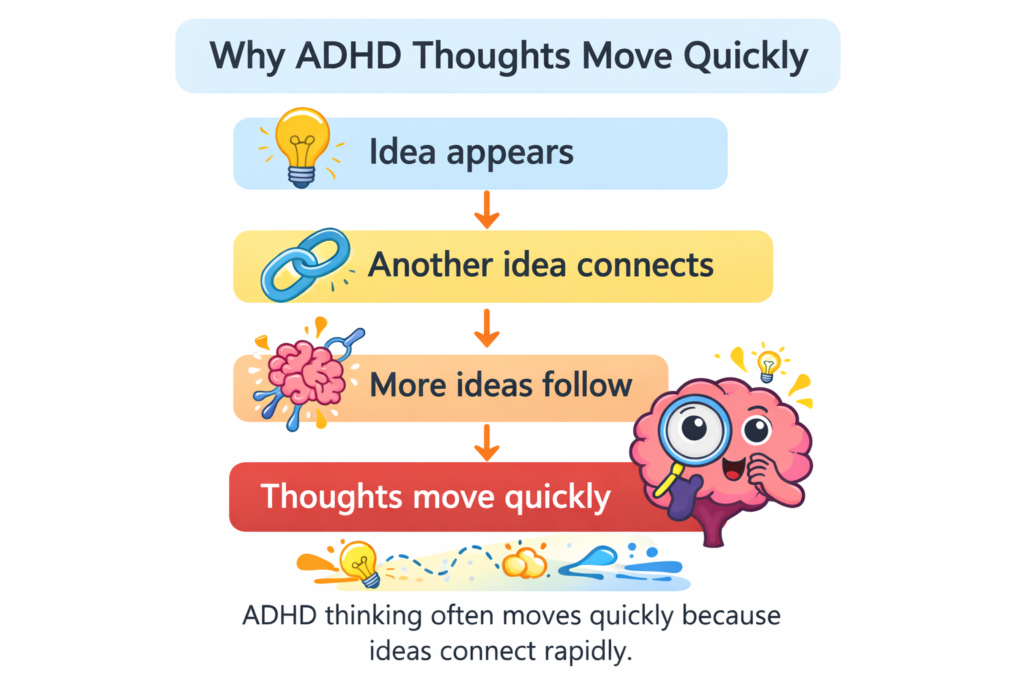
Because ideas connect so quickly, people with ADHD may feel a strong urge to speak before the thought disappears. This rapid thinking style can sometimes lead to interrupting in conversations.
What Can Help If Interrupting Bothers You
Many ADHD adults want to stay engaged in conversations without interrupting as much.
Small strategies can help.
Pause Briefly Before Speaking
Practicing even a two-second pause before speaking can help.
This creates a moment for the brain to check:
Is this the right moment to say this?
Even a short pause can improve conversation flow.
Write the Thought Down
If you worry about forgetting your idea:
– jot it in your phone
– write a keyword on paper
This lets your brain relax because the idea is saved somewhere external.
Notice the “Urgency Feeling”
Interruptions often happen when there’s a strong internal signal:
“Say it now!”
Learning to recognise this feeling can help create a small pause.
Practice Gentle Self-Repair
If you realise you interrupted someone, you can say:
“Sorry — I didn’t mean to interrupt. Go ahead.”
Most people respond warmly to these moments of honesty.
The Important Thing to Know
If you have ADHD and sometimes interrupt conversations, it doesn’t mean you are rude or disrespectful.
Often it means your brain is:
– fast
– curious
– highly associative
– emotionally engaged
Many of the same traits that lead to interrupting also make people with ADHD:
– engaging conversationalists
– enthusiastic listeners
– great storytellers
– deeply curious thinkers
Understanding how the ADHD brain works can help turn moments of embarrassment into self-understanding instead.
FAQ
Is interrupting a symptom of ADHD?
Interrupting is not an official diagnostic symptom, but it commonly occurs due to ADHD traits like impulsivity, fast associative thinking, working memory differences, and emotional engagement.
Why do people with ADHD talk over others?
Many ADHD brains worry that a thought will disappear quickly. This creates an internal urgency to share ideas before they are forgotten.
How can people with ADHD stop interrupting conversations?
Helpful strategies include:
– pausing briefly before speaking
– writing thoughts down during conversations
– practicing awareness of the “say it now” feeling
– using gentle self-repair if interruptions happen
If you’d like, I can also help you optimise this article to rank on Google faster by adding:
– the exact keywords ADHD blogs rank for
– a meta title + meta description
– internal linking structure
– featured snippet optimisation