ADHD in Daily Life: Why Everything Feels Hard (And What’s Actually Going On)
If you have ADHD, everyday life can feel strangely difficult.
Not just big tasks — even small things like replying to a message, starting work, or following a conversation can feel overwhelming.
You might find yourself thinking:
“Why is this so hard for me when it seems easy for everyone else?”
This isn’t laziness or lack of discipline.
It’s the way ADHD affects attention, memory, and mental energy.
Once you understand what’s actually going on, things start to make a lot more sense — and feel a lot less personal.
ADHD Isn’t About “Not Trying Hard Enough”
ADHD is not a motivation problem.
It’s an executive function difference.
That means the part of your brain responsible for:
starting tasks
organising information
managing attention
holding things in mind
…doesn’t work in a consistent, reliable way.
So instead of:
-> “I don’t want to do this”
it’s often:
-> “I can’t get my brain to engage with this right now”
That’s a very different problem — and it needs a different approach.
Why Simple Tasks Feel So Hard
One of the most frustrating parts of ADHD is this:
-> Simple things don’t feel simple
You might:
stare at a task and not start
feel overwhelmed by basic decisions
avoid things you actually want to do
This isn’t because the task is hard.
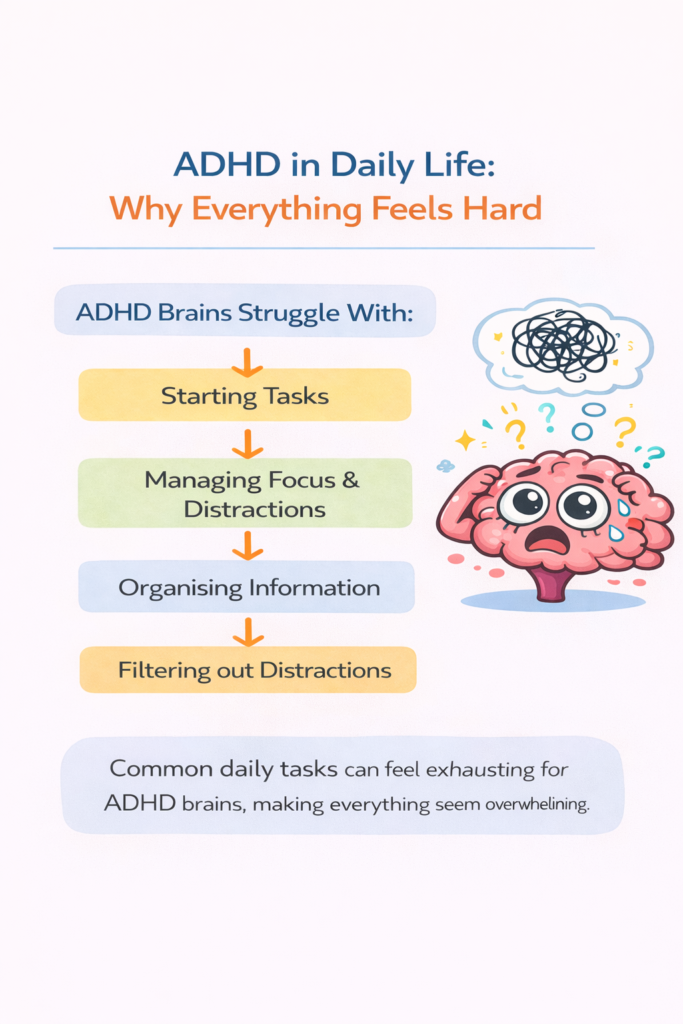
It’s because your brain struggles with:
1. Starting (activation)
There’s a gap between:
-> knowing what to do
-> and being able to begin
This is why you can think about something all day… and still not start.
2. Prioritising
Everything can feel equally important (or equally unimportant).
So your brain doesn’t know:
-> what to do first
-> what actually matters
Which leads to paralysis.
3. Overwhelm
When too many steps exist, your brain doesn’t simplify.
It shuts down or avoids.
Real-life example:
You sit down to “just send one email.”
But your brain sees:
– what to say
– how it sounds
– whether it’s right
– what happens after
And suddenly it feels like… too much.
Why Your Brain Feels So Busy
Many people with ADHD describe their mind as:
– fast
– loud
– constantly active
This shows up as:
– racing thoughts
– jumping between ideas
– overthinking everything
Why this happens:
Your brain is constantly scanning for:
– stimulation
– relevance
– interest
So instead of filtering thoughts…
-> it lets everything in
Emotional truth:
It can feel productive — like you’re thinking deeply —
but nothing actually moves forward.
Why Conversations Can Feel Difficult
ADHD doesn’t just affect tasks — it affects how you communicate.
You might:
interrupt without meaning to
overshare
change topics quickly
forget what you were saying mid-sentence
Why this happens:
1. Fast thoughts
Your brain moves quicker than the conversation.
So you jump in before the thought disappears.
2. Working memory drops
You can lose track of:
– what you were saying
– what the other person said
– what the point was
3. Emotional impulsivity
You might say things in the moment that feel:
– too much
– too fast
– too honest
Real-life example:
You’re in a conversation and suddenly:
– you interrupt because the idea feels urgent
-> then forget your point halfway through
-> then feel embarrassed after
Why You Lose Things or Forget Things
This is one of the most common ADHD experiences.
Losing keys. Forgetting items. Misplacing things constantly.
This isn’t carelessness.
It’s a working memory issue
Working memory is your brain’s ability to:
-> hold information briefly
-> while doing something else
With ADHD:
– you put something down
– your attention shifts
– the information disappears
Real-life example:
You put your phone somewhere while thinking about something else.
Your brain never properly “registered” it.
So later…
-> it feels like it vanished
What Actually Helps (Without Overcomplicating It)
This is important:
-> ADHD doesn’t improve through pressure or “trying harder”
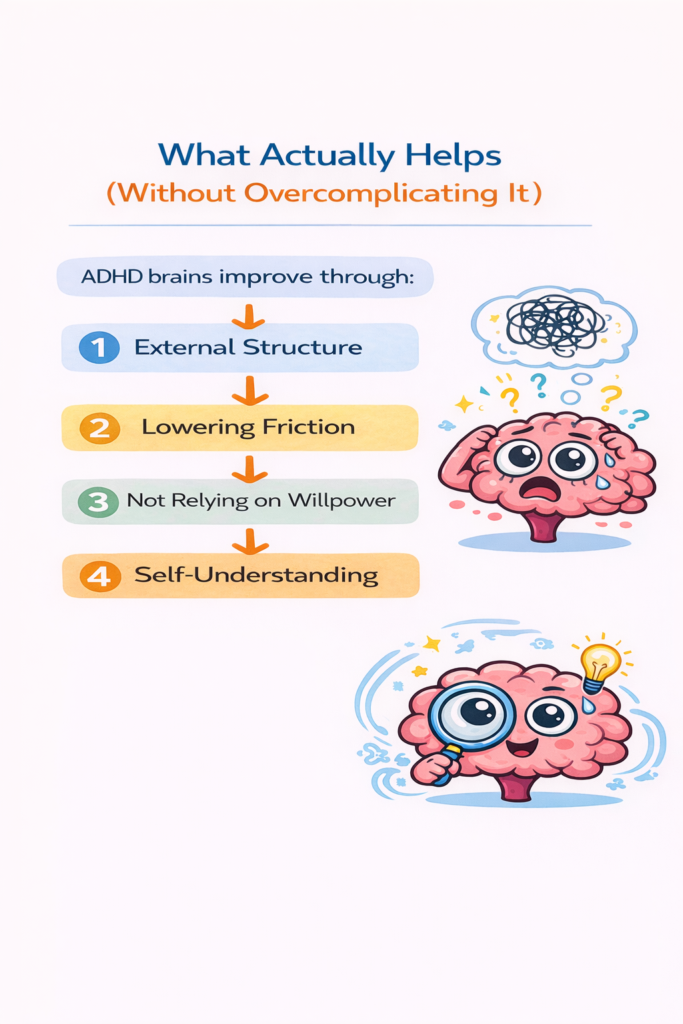
It improves through:
1. External structure
Instead of relying on your brain to remember or organise:
– write things down
– reduce choices
– make steps visible
2. Lowering friction
Make things easier to start:
– smaller steps
– fewer decisions
– less setup
3. Not relying on willpower
Willpower is inconsistent with ADHD.
Systems work better than effort.
4. Self-understanding
When you understand:
– “this is how my brain works”
You stop turning everything into:
– “what’s wrong with me?”
Final Thought
If ADHD makes your daily life feel harder, you’re not imagining it.
But it’s also not a personal failure.
It’s a different way your brain processes:
– attention
– effort
– information
And once you understand that…
-> things become easier to work with — not against.
If this helped you understand your brain a bit better,
I’ve put together a simple guide to help you:
– start tasks
– reduce overwhelm
– feel more in control day-to-day