People with ADHD often overshare in conversations.
Learn how impulsivity, emotional openness, fast thinking, and dopamine from connection contribute to ADHD oversharing.
Many people with ADHD notice that they share personal information very quickly in conversations. Sometimes they only realize it afterwards and feel embarrassed, wondering why they said so much.
Oversharing in ADHD is usually not a lack of boundaries or social awareness. Instead, it often happens because ADHD affects impulse control, emotional processing, and how the brain seeks stimulation during conversations.
Understanding why this happens can make the experience much less shame-filled.
Key Takeaways
-People with ADHD may overshare because impulsivity makes it harder to filter thoughts before speaking.
-ADHD brains are often emotionally open and expressive, which can lead to sharing personal experiences quickly.
–Fast associative thinking can bring up memories or stories that feel natural to share immediately.
-Social connection can release dopamine, making conversation especially rewarding for ADHD brains.
1. Impulsivity Makes It Harder to Filter Thoughts
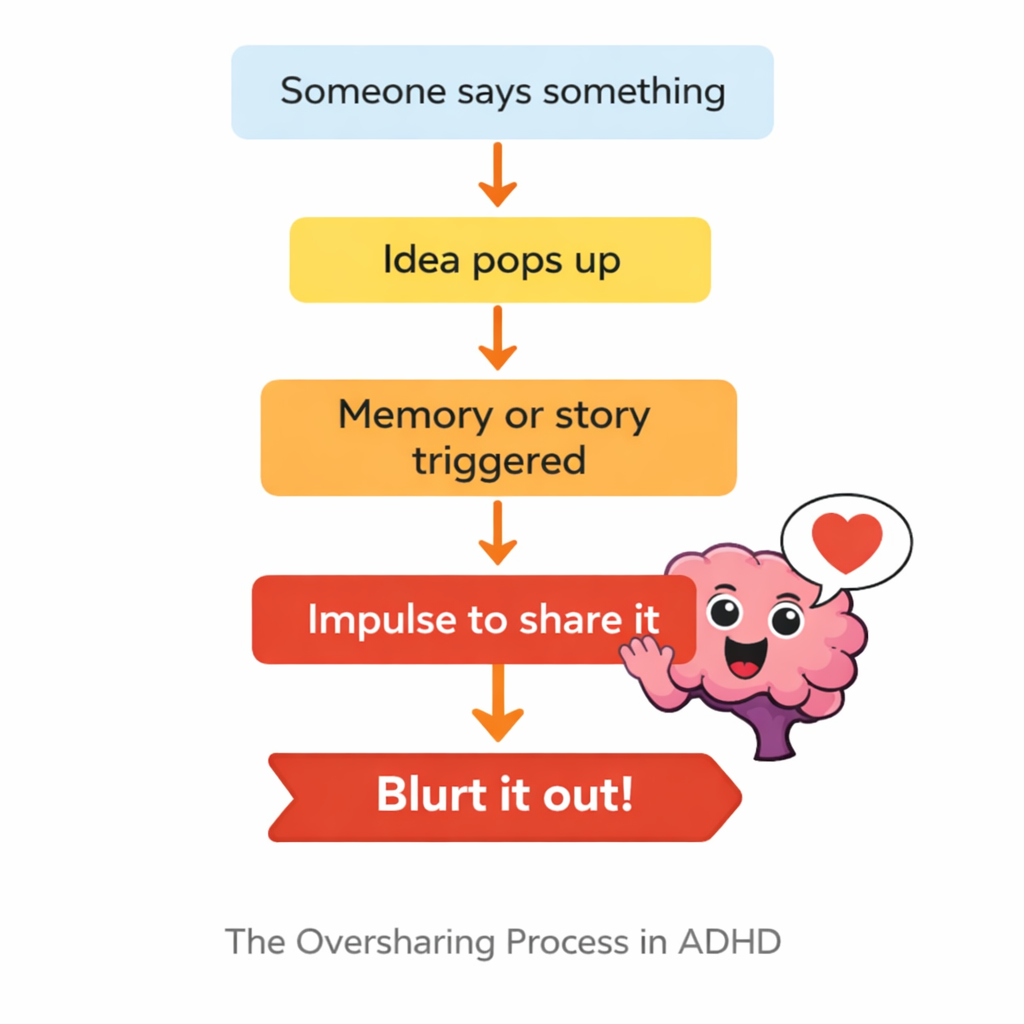
One of the core traits of ADHD is impulsivity.
Impulsivity doesn’t only affect actions. It also affects speech.
Most people naturally run thoughts through a quick filter:
–Is this appropriate to share?
–Is this the right moment?
–How well do I know this person?
For people with ADHD, that filter can be weaker or slower.
A thought appears, it feels relevant, and it comes out immediately.
Often the realisation happens after the conversation, not during it.
2. ADHD Brains Are Often Emotionally Open
Many people with ADHD experience emotions very strongly and very directly.
Because of this, emotional experiences can feel:
-important
-meaningful
-relevant to the conversation
Sharing personal stories can feel like a natural way to connect.
While others might slowly reveal personal details over time, someone with ADHD may share them much earlier in a conversation.
This isn’t usually intentional oversharing.
It’s often simply authentic emotional expression.
3. Fast Associative Thinking Brings Up Personal Stories
ADHD brains tend to make rapid connections between ideas.
When someone says something in conversation, the ADHD brain may instantly connect it to:
-a similar experience
-a memory
-a story
-a personal insight
Because the connection feels immediate and relevant, sharing the story can feel like continuing the conversation naturally.
But sometimes those stories contain very personal information, which can lead to oversharing without realising it.
4. Social Connection Gives the ADHD Brain Dopamine
ADHD involves differences in the brain’s dopamine regulation system.
Dopamine is a neurotransmitter involved in motivation, interest, and reward.
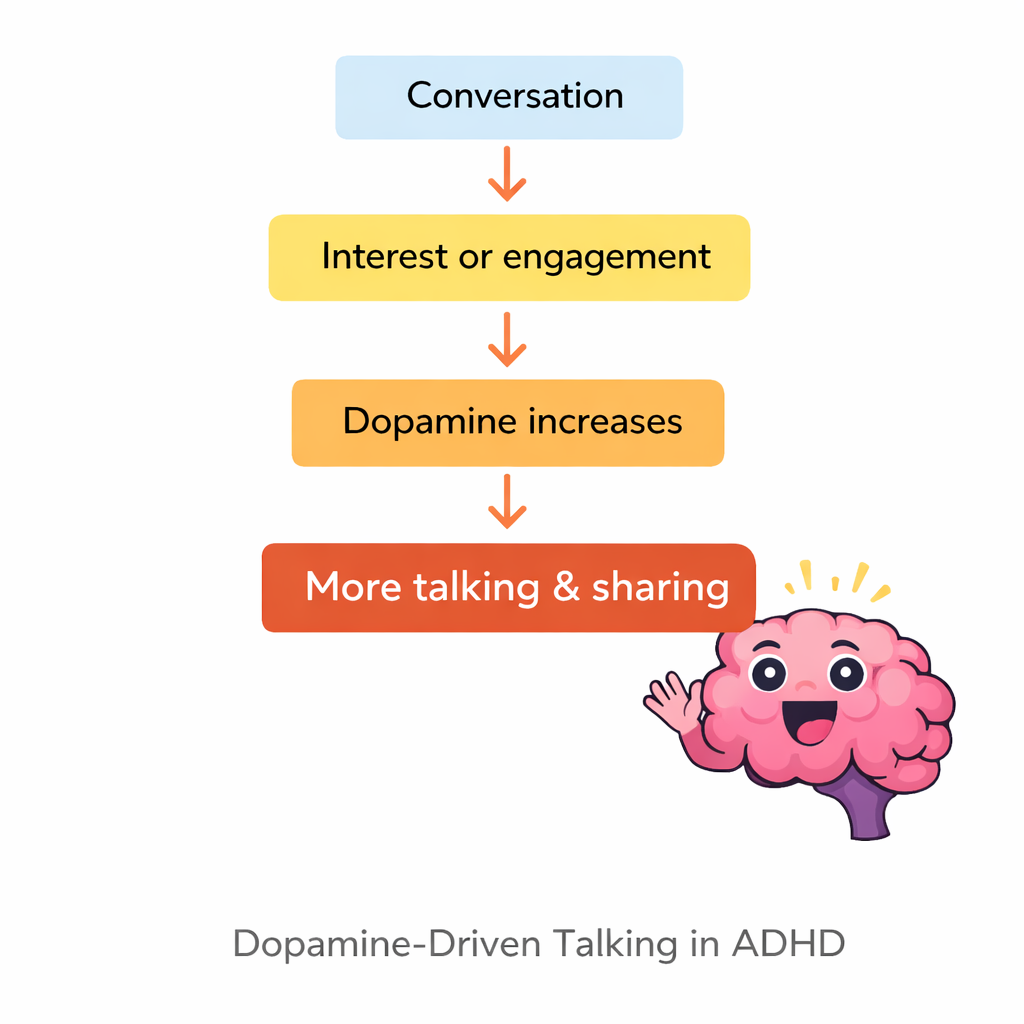
Many everyday tasks feel under-stimulating for ADHD brains, but engaging conversations can feel highly rewarding.
When someone shows interest, listens closely, or responds warmly, the brain can receive a dopamine boost.
This can make conversations feel exciting and energising, which may lead to:
-talking more
-sharing more stories
-revealing more personal information
In other words, oversharing can sometimes happen because the brain is enjoying the connection so much.
The Important Thing to Know
If you have ADHD and sometimes overshare, it doesn’t mean you lack boundaries or social awareness.
Often it means your brain is:
–impulsive
–emotionally expressive
–highly associative
-motivated by connection
Many of the same traits that lead to oversharing are also the traits that make people with ADHD engaging, open, and deeply authentic conversationalists.
What Can Help If Oversharing Bothers You
Some ADHD adults find these strategies helpful:
Pause Before Responding
Practice taking a brief pause before speaking, even just two seconds.
This gives the brain time to check:
Is this something I want to share right now?
Notice Your “Connection Excitement”
If a conversation feels especially exciting, it may be a dopamine moment.
That excitement can sometimes lead to saying more than intended.
Practice Gentle Self-Repair
If you realise you overshared, you can simply say:
“Wow, that was probably more detail than you needed.”
Most people respond warmly to small moments of honesty like this.
One More Important Point
Many people with ADHD worry that oversharing makes them “too much”.
But the same openness that sometimes leads to oversharing is also what helps people with ADHD be:
-authentic
-emotionally honest
-easy to connect with
Understanding how the ADHD brain works can help turn moments of embarrassment into self-understanding instead.
FAQ
Is oversharing a symptom of ADHD?
Oversharing isn’t an official diagnostic symptom of ADHD, but it can happen because of ADHD traits such as impulsivity, emotional intensity, and fast associative thinking.
Why do people with ADHD talk about personal things quickly?
ADHD brains often make quick connections between ideas and may feel strong emotions during conversations. This can make sharing personal stories feel natural and immediate.
How can people with ADHD stop oversharing?
Strategies like pausing briefly before responding, becoming aware of conversation excitement, and practicing small “repair” statements can help manage oversharing while still staying authentic.